


If you’re planning a trip to Hanoi and seeking an immersive journey through Vietnam’s rich history, profound culture, and architectural grandeur, look no further than the historic Ba Đình district—home to The Flower Boutique Hotel at 55 P. Nguyễn Trường Tộ, Nguyễn Trung Trực, Ba Đình, Hà Nội. Nestled in one of the city’s most culturally significant neighborhoods, this charming boutique hotel places you just steps away from some of Vietnam’s most iconic landmarks. Whether you’re a history buff, a cultural explorer, or simply a curious traveler, these nearby attractions offer unforgettable experiences that reveal the soul of Vietnam.
In this detailed guide, we’ll walk you through three unmissable sites within easy walking distance of The Flower Boutique Hotel: Ho Chi Minh Mausoleum & Complex, the Imperial Citadel of Thăng Long, and the Temple of Literature. Each destination tells a unique chapter of Vietnam’s story—from ancient dynasties to revolutionary ideals—and together, they form a perfect cultural itinerary for your stay in Hanoi.
1. Ho Chi Minh Mausoleum & Complex – A Tribute to Vietnam’s Founding Father
Distance from The Flower Boutique Hotel: Just a 5-minute walk (approx. 400 meters)
No visit to Hanoi is complete without paying respects at the Ho Chi Minh Mausoleum, the final resting place of Vietnam’s revered revolutionary leader, President Hồ Chí Minh. Located in the heart of Ba Đình Square—the very site where he declared Vietnam’s independence in 1945—the mausoleum is both a solemn memorial and a symbol of national pride.
What to Expect:
- The Mausoleum: Built between 1973 and 1975 with granite and marble, the structure blends Soviet monumental style with traditional Vietnamese design elements. Visitors can view Hồ Chí Minh’s preserved body in a glass case, lying in state under soft red lighting. Note that photography is strictly prohibited inside, and respectful attire (shoulders and knees covered) is required.
- Ho Chi Minh Museum: A short stroll away, this modern museum uses multimedia exhibits, personal artifacts, and historical documents to chronicle his life, philosophy, and role in Vietnam’s struggle for independence.
- Stilt House & Presidential Palace Gardens: Step into the modest wooden stilt house where Hồ Chí Minh lived and worked from 1958 to 1969. Surrounded by tranquil lotus ponds and lush gardens, it reflects his humble lifestyle despite his monumental influence.
- One Pillar Pagoda: Just across the street, this 11th-century Buddhist temple—rebuilt after wartime destruction—stands on a single stone pillar, symbolizing a lotus rising from the water, a sacred image in Vietnamese culture.
Visitor Tips:
- The mausoleum is closed on Mondays and Fridays, and typically open from 7:30 AM to 10:30 AM (hours may vary by season).
- Arrive early to avoid long queues, especially during holidays and weekends.
- Maintain silence and decorum—this is a place of reverence for Vietnamese people.
Why Stay at The Flower Boutique Hotel?
Its prime location means you can visit the mausoleum at sunrise, when the square is quiet and bathed in golden light—perfect for reflective moments and photography (outside the mausoleum).
2. Imperial Citadel of Thăng Long – A UNESCO World Heritage Site Steeped in Royal Legacy
Distance from The Flower Boutique Hotel: Approximately 10-minute walk (700 meters)
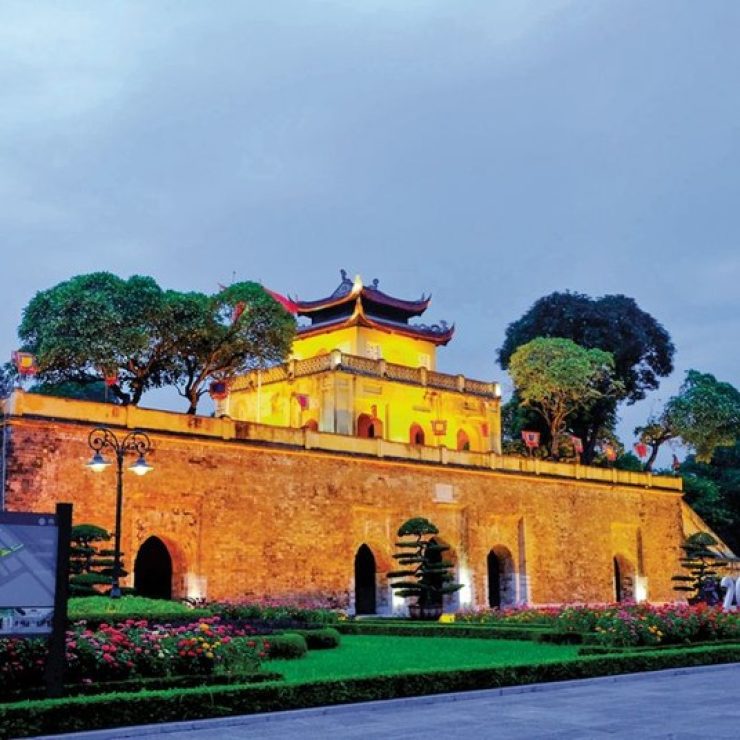
Recognized by UNESCO in 2010, the Imperial Citadel of Thăng Long is one of Hanoi’s most historically layered sites. Built in the 11th century during the Lý Dynasty, it served as the political and military heart of Vietnam for over 13 centuries—witnessing the rise and fall of dynasties, colonial occupations, and revolutionary movements.
Highlights of the Citadel:
- Đoan Môn Gate: The grand southern entrance, adorned with intricate carvings and five arched passageways reserved for royalty.
- Kinh Thiên Palace Foundation: Though the palace was demolished by the French in the 19th century, its stone dragon-decorated staircases and massive foundations remain, offering a glimpse into imperial grandeur.
- Archaeological Excavations: Ongoing digs have uncovered artifacts from the Lý, Trần, Lê, and Nguyễn dynasties—including ceramics, coins, and roof tiles—displayed in on-site exhibition halls.
- Flag Tower of Hanoi: One of the few structures to survive French demolition, this 19th-century tower offers panoramic views of the city and houses a military history museum.
Cultural Significance:
The citadel embodies the resilience of Vietnamese identity. Despite centuries of foreign rule and war, its foundations endured, symbolizing the nation’s unbroken spirit. Today, it’s a peaceful park-like space where locals practice tai chi, fly kites, or simply enjoy shaded walks among ancient ruins.
Visitor Tips:
- Open daily from 8:00 AM to 5:00 PM.
- Audio guides and English signage are available.
- Combine your visit with a stop at nearby Hanoi Opera House or Hoàn Kiếm Lake for a full day of exploration.
Convenience from The Flower Boutique Hotel:
After a morning at the Ho Chi Minh Complex, head north along Điện Biên Phủ Street—you’ll reach the citadel’s main gate in under 10 minutes, making it ideal for a seamless cultural walking tour.
3. Temple of Literature (Văn Miếu – Quốc Tử Giám) – Vietnam’s First University & Confucian Sanctuary
Distance from The Flower Boutique Hotel: About 15-minute walk (1.2 km) or a quick 5-minute taxi ride
Tucked away behind tree-lined streets, the Temple of Literature is a serene oasis dedicated to Confucius and Vietnam’s scholarly traditions. Established in 1070, it became the country’s first national university in 1076, educating royal elites and mandarins for over 700 years.
Why It Captivates Visitors:
- Five Courtyards: Each courtyard represents a stage of Confucian learning—from reverence for teachers to scholarly achievement. The layout follows traditional Chinese feng shui principles but with distinct Vietnamese aesthetics.
- Stelae of Doctors: 82 stone steles mounted on tortoise backs honor graduates of the royal exams between 1442 and 1779. These are among Vietnam’s most treasured historical artifacts.
- Traditional Architecture: Red lacquered gates, carved wooden beams, and tranquil lotus ponds create a meditative atmosphere far removed from Hanoi’s urban bustle.
- Cultural Events: During Tet (Lunar New Year) and graduation season, the temple hosts calligraphy demonstrations, poetry readings, and ceremonies where students pray for academic success.
A Living Legacy:
Even today, Vietnamese students visit the temple before exams to rub the heads of the stone turtles for luck—a charming blend of ancient ritual and modern hope.
Visitor Tips:
- Open daily from 8:00 AM to 5:30 PM.
- Entrance fee includes access to all courtyards and exhibitions.
- Visit early morning or late afternoon for fewer crowds and softer light—ideal for photography.
Getting There from The Flower Boutique Hotel:
While walkable, the route passes through charming local neighborhoods with street food stalls and craft shops. Alternatively, grab a Grab (Southeast Asia’s Uber) or hop on a cyclo for a scenic ride.
Why Choose The Flower Boutique Hotel for Your Cultural Hanoi Stay?
Strategically located in Ba Đình District—Hanoi’s political and historical epicenter—The Flower Boutique Hotel isn’t just a place to sleep; it’s your gateway to Vietnam’s soul. Here’s why it’s the perfect base:
- Unbeatable Location: All three attractions are within a 15-minute radius, minimizing transit time and maximizing cultural immersion.
- Authentic Vietnamese Hospitality: The hotel blends modern comfort with local charm—think floral motifs, silk accents, and warm service.
- Local Insights: Staff can arrange guided tours, recommend hidden street food gems, or help you navigate opening hours and etiquette at sacred sites.
- Peaceful Retreat: After a day of exploration, return to a quiet, elegant room away from the noise of the Old Quarter, yet still close to everything.
Plan Your Perfect Cultural Day in Hanoi
Morning: Start at Ho Chi Minh Mausoleum (arrive by 7:30 AM). Explore the stilt house and museum.
Late Morning: Walk to the Imperial Citadel of Thăng Long—allow 1.5–2 hours.
Lunch: Try phở or bún chả at a local eatery near the citadel (ask your hotel for recommendations!).
Afternoon: Head to the Temple of Literature for a reflective, photo-worthy visit.
Evening: Return to The Flower Boutique Hotel for a relaxing evening, or stroll to Hoàn Kiếm Lake for sunset views.
Final Thoughts
Hanoi’s magic lies in its layers—where ancient temples stand beside revolutionary monuments, and where every street corner whispers a story of resilience, scholarship, and spirit. By staying at The Flower Boutique Hotel, you position yourself at the heart of this narrative, with Vietnam’s most profound cultural treasures just outside your door.
Whether you’re tracing the footsteps of emperors, paying homage to a national hero, or seeking wisdom in a scholar’s sanctuary, these experiences will deepen your understanding of Vietnam far beyond postcard snapshots. Come with curiosity, leave with connection.
Book your stay at The Flower Boutique Hotel today—and step into history with every sunrise.



 English
 Korean
 Chinese
 Spanish
 French
 German
 Italian
 Thai
Thai Russian